Updated 2026-07-30 · Author: Michael Torres, iGaming Industry Analyst
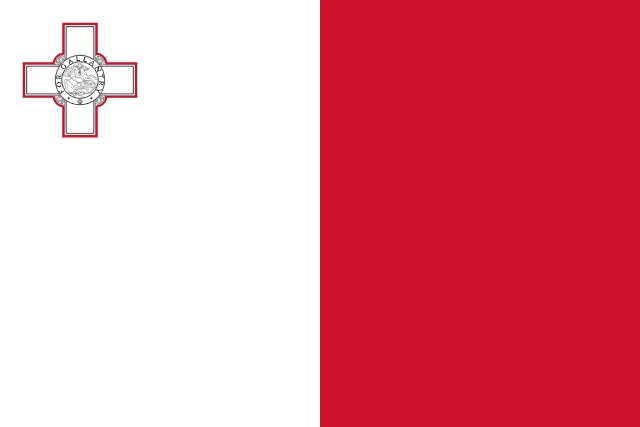
Malta is an EU member state, and the Malta Gaming Authority (MGA) is the regulated-EU benchmark most operators measure every other jurisdiction against.
A Malta casino license is the EU gold standard because the Malta Gaming Authority is a European Union member-state regulator, and its badge is read by banks, payment processors, and tier-1 game studios as proof that a serious fit-and-proper review stands behind the brand. That credibility is the whole product, and it is also the reason the process runs slower and the compliance bill runs higher than any offshore route. The practical question is not whether Malta is reputable, but whether the market you are targeting justifies paying for that reputation. This guide breaks down what an MGA license costs, the license types, the timeline, the 2026 tax picture, and where Malta beats or loses to Curaçao and Anjouan.
Key facts (verify current rules with the MGA)
- Regulator: the Malta Gaming Authority (MGA), an EU member-state authority, under the Gaming Act 2018.
- License structure: one B2C Gaming Service licence covering game Types 1-4, plus a separate B2B Critical Gaming Supply licence for suppliers.
- Application fee: a one-time, non-refundable fee reported around EUR 5,000.
- Annual licence fee: a fixed fee commonly cited around EUR 25,000 for B2C, plus a compliance contribution that scales with gaming revenue.
- Gaming tax: historically 5% of GGR from Malta-based players; from 1 October 2026 this restructures to 15% (Type 1) and 10% (Types 2-4) under Legal Notices 84 and 86 of 2026.
- Timeline: roughly 6 to 12 months, with heavy due diligence, AML, and player-fund segregation.
This is editorial guidance, not legal advice; confirm current rules with the regulator and a licensed gaming lawyer.
What is the MGA licence?
The MGA issues gaming licences under the Gaming Act 2018, and the structure is cleaner than most jurisdictions once you separate the two sides of the market. On the operator side, there is a single B2C Gaming Service licence that covers game “types” rather than forcing a separate licence per product. Type 1 is games of chance played against the house on a random number generator, which is your casino and slots category, including RNG roulette and blackjack. Type 2 is fixed-odds betting, primarily sports and esports. Type 3 is peer-to-peer play where the house takes a commission rather than a position, which is poker and bingo. Type 4 is controlled skill games and fantasy formats. One Gaming Service licence can authorise more than one type, which is why an MGA operator can run casino and sportsbook under a single grant.
The supplier side is separate. A company providing the platform, the RNG, or other critical systems to a licensed operator holds a B2B Critical Gaming Supply licence, not a B2C one. This is the distinction operators get wrong most often: a provider being MGA-licensed as a supplier gives you, the operator, no right to take a bet. You still need your own B2C authorisation. Our licensing guide unpacks that split, and it matters here because every platform tie-in later on this page is a B2B licence, not an operating one.
Why Malta is the EU gold standard
Malta earns the “gold standard” label because it pairs EU member-state standing with a low-tax base and a mature regulatory apparatus, a combination no offshore jurisdiction can replicate. When a bank or a tier-1 payment processor sees an MGA licence, it reads years of institutional track record and a real fit-and-proper regime behind it. That is the difference between a payment partner returning your call and ignoring it, and for an operator targeting regulated European players, it is decisive.
The one thing the MGA badge does not do is hand you the whole EU. There is a widespread belief that a Malta licence “passports” across Europe the way a MiFID financial licence does. It does not. Online gambling is regulated at the national level across the bloc, and the large regulated markets police that hard. An MGA licence signals credibility everywhere, but it authorises regulated play only in the markets that recognise it, not automatically in every member state. Treat the passporting story as marketing, and read the market-access section below before you model revenue.
Cost breakdown
Budget the licence fees first, then accept that they are the smallest line in the real Malta bill. The published figures are moderate. The application fee is a one-time, non-refundable charge reported around EUR 5,000. Once granted, a B2C Gaming Service operator pays a fixed annual licence fee commonly cited around EUR 25,000, and B2B suppliers pay a fixed annual fee generally reported in the EUR 25,000 to EUR 35,000 band by revenue.
On top of the fixed fee, B2C operators pay a compliance contribution that scales with gaming revenue, set with a minimum and a maximum per game type. For a Type 1 casino licence, that contribution is commonly cited running from a floor near EUR 15,000 up to a ceiling in the hundreds of thousands per year as revenue climbs. Malta also sets minimum share-capital requirements, frequently reported around EUR 100,000 for Type 1 and Type 2 operators and around EUR 40,000 for Type 3, Type 4, and B2B suppliers. These figures are set in regulations and get amended, so treat them as anchors to verify rather than fixed quotes. The expensive part of Malta is never the fee schedule; it is the corporate substance, local presence, and ongoing compliance function the MGA expects you to fund. Our white-label casino cost breakdown models those overheads against platform spend, and the break-even calculator shows whether your expected GGR clears them.
Process and timeline
Plan for roughly six to twelve months from application to a live licence, and expect the review to be documentation-heavy rather than a formality. The MGA runs a genuine fit-and-proper assessment of the beneficial owners, directors, and key function holders, so the file has to hold up: source-of-funds evidence, corporate structure, a detailed business plan, financial projections, and compliance policies that show you can run AML, KYC, and responsible-gambling duties day to day.
The sequence runs from incorporating a Maltese entity and assembling the corporate file, through the fit-and-proper and business-plan review, into a technical audit of the platform and games before go-live, and then into ongoing supervision. Player-fund segregation is a hard requirement: player balances must be kept separate from operational money so a business failure does not swallow customer funds. Where an offshore regulator might grant in weeks, Malta’s timeline reflects the depth of the check, and that depth is what makes the badge worth carrying. The full launch sequence sits in how to launch an online casino.
Which markets can you target?
An MGA licence gives you credibility across Europe and a legal base to serve markets that recognise it, but it does not let you operate in every EU state, and this is the single most misunderstood point about Malta. Several large European markets require their own local licence regardless of what you hold in Malta. Germany, Spain, Italy, and the Netherlands all run national regimes with local authorisation, tax, and technical rules, and an MGA licence on its own does not admit you to any of them. You apply locally, or you stay out.
Where Malta earns its keep is as a reputable EU home base and the licence that unlocks banking, payments, and tier-1 studio deals across the continent. For markets that recognise EU-grade oversight without a mature local regime, the MGA licence can be the operating authority; for the walled-garden markets, it is the credibility layer you build local licences on top of. Model your target countries one by one before assuming the Malta grant covers them. Our Curaçao vs MGA comparison walks through how that reality changes the jurisdiction math.
Taxes and ongoing compliance
Malta’s tax picture is changing in 2026, so get the timing exact before you build a financial model. Historically, the gaming tax has been 5% of gross gaming revenue generated from players physically located in Malta, with B2B suppliers exempt from gaming tax and paying only their fixed fees. That 5% is narrow by design: it only touches revenue from Malta-based players, so an operator serving players elsewhere carries a very different effective rate.
That is being restructured. Under Legal Notices 84 and 86 of 2026, published on 1 April 2026 and taking effect on 1 October 2026, the single 5% rate is replaced with differentiated rates by service type: 15% for Type 1 (casino) and 10% for Types 2, 3, and 4, with certain narrow activities keeping a 5% rate. The change still applies to revenue from Maltese players, and the MGA has said further implementation guidance will follow, so verify the current position with the regulator and a Maltese tax adviser. Beyond gaming tax, the ongoing compliance load is the real cost: the compliance contribution, AML and KYC operations, player-fund segregation, and regular reporting, all covered in our compliance stack guide.
Pros and cons ⚠️
The trade is credibility and market access against cost and time, and it resolves differently depending on who you are.
Pros. EU member-state standing that banks, processors, and tier-1 studios trust instantly. A durable, defensible licence that reads as a serious asset in regulated Europe. A low tax base by design, narrowed to Malta-present players. A clean game-type licence structure that lets casino and sportsbook run under one grant.
Cons ⚠️. A six-to-twelve-month timeline that offshore routes beat by months. Real corporate substance, local presence, and a funded compliance function, which is where the money actually goes. The 2026 gaming-tax increase for Malta-based revenue. And the biggest misconception to correct: no automatic passport into every EU market, since Germany, Spain, Italy, and the Netherlands all need local licences.
Malta vs Curaçao vs Anjouan
Malta, Curaçao, and Anjouan sit at three points on the same curve of cost, speed, and credibility, and picking between them is really about your target market. Malta is the premium EU-grade option: highest cost, longest timeline, strongest banking and market-access weight. Curaçao is the reformed mid-tier offshore choice under its 2024 LOK regime, cheaper and faster with default crypto acceptance, but non-EU and still reading as entry-tier to conservative European banks. Anjouan is the low-cost, fast, emerging-market entry point, cheaper still and quicker to grant, but the thinnest on institutional trust.
The decision compresses to this: take Malta when you need EU credibility, tier-1 banking, and access to regulated European markets, and can fund the substance to earn it. Take a cheaper, faster jurisdiction when you are validating a market, running crypto-first, or targeting .com and emerging players where the MGA premium buys you nothing. Many serious operators stack them in sequence, launching offshore to prove the model and adding Malta once EU volume justifies the compliance hire. The head-to-head detail lives in Curaçao vs MGA, the Curaçao casino license page, and the Anjouan casino license breakdown.
Platforms that hold an MGA licence
If you are launching under an MGA-friendly stack, several providers in our ranking hold their own B2B Critical Gaming Supply licence, the supplier-side credential you want alongside your operating licence. SoftSwiss holds a public MGA B2B grant on its Game Aggregator. EveryMatrix carries MGA B2B licence 201/2011 across its modular CasinoEngine and OddsMatrix stack. Digitain holds MGA Critical Gaming Supply licence 592/2018 alongside a full UKGC stack, which suits a sportsbook-led European build. Pragmatic Solutions holds MGA B2B 619/2018 as part of a tier-1 set aimed at operators that already carry their own licence. Remember the distinction: their B2B grant proves the supplier is compliant, not that you are, so you still need your own MGA operating licence. Compare the full field on the comparison page, and see how we score licensing footprint in our methodology.
Frequently asked questions
How much does an MGA licence cost?
Expect a one-time application fee reported around EUR 5,000, plus a fixed annual licence fee commonly cited around EUR 25,000 for a B2C Gaming Service licence, and a compliance contribution that scales with gaming revenue on top. B2B suppliers pay a fixed annual fee generally reported in the EUR 25,000 to EUR 35,000 band. These figures are set in regulations and change, so confirm the current schedule with the MGA before budgeting.
How long does it take to get an MGA licence?
Plan for roughly six to twelve months. The MGA runs a genuine fit-and-proper review of owners and key personnel, assesses your business plan and financials, and audits the platform technically before granting. A clean, well-prepared file moves faster; gaps in source-of-funds evidence or compliance policy are what stretch the timeline.
Does an MGA licence give me access to the whole EU?
No, and this is the most common misconception. An MGA licence carries strong credibility across Europe, but online gambling is regulated nationally. Large markets including Germany, Spain, Italy, and the Netherlands require their own local licence regardless of your Malta grant. Model each target country separately.
What is the difference between the B2C and B2B MGA licence?
The B2C Gaming Service licence authorises an operator to run a casino or sportsbook and take player bets across game Types 1-4. The B2B Critical Gaming Supply licence authorises a company to supply the platform, RNG, or other critical systems to those operators. A provider holding a B2B licence does not give you any operating right; you need your own B2C licence to take bets.
What is Malta’s gaming tax in 2026?
Historically 5% of gross gaming revenue from players located in Malta, with B2B suppliers exempt. From 1 October 2026, under Legal Notices 84 and 86 of 2026, that restructures to 15% for Type 1 (casino) and 10% for Types 2, 3, and 4, still applied to Malta-based player revenue. Verify the current rate and any implementation guidance with the Malta Gaming Authority and a Maltese tax adviser.
Is Malta worth it versus a cheaper offshore licence?
It depends on your market. If you need EU credibility, tier-1 banking, and access to regulated European players, Malta’s cost and timeline are the admission price and worth paying. If you are validating a market, running crypto-first, or targeting emerging and .com players, a cheaper, faster jurisdiction like Curaçao or Anjouan gets you live sooner for a fraction of the cost.
Related
- Licensing guide: the full jurisdiction roster and how to verify a provider’s licence
- Curaçao vs MGA: the head-to-head that decides the offshore-versus-EU call
- Curaçao casino license and Anjouan casino license: the lower-cost alternatives
- Compliance stack: the AML, KYC, and reporting machinery Malta expects you to fund
- How to launch an online casino: the end-to-end launch sequence
- Comparison and methodology: the full provider field and how we score licensing
This is editorial guidance, not legal advice; confirm current rules with the regulator and a licensed gaming lawyer. This site may earn referral commissions from provider links, disclosed transparently per FTC guidelines. No providers paid for placement or ranking.