Updated 2026-07-30 · Author: Michael Torres, iGaming Industry Analyst
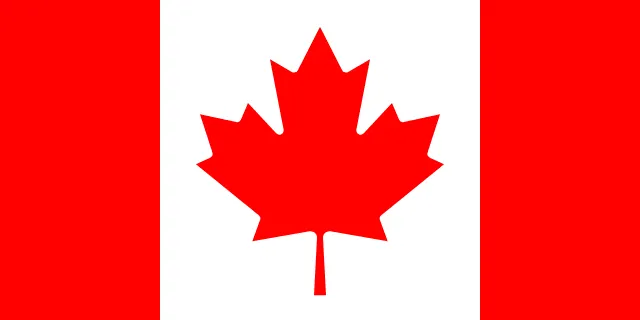 Canada regulates iGaming province by province, not federally, so there is no single “Canadian licence.”
To launch a legal online casino in Canada in 2026, you register in a specific province, not with the country. The only two open, competitive markets are Ontario, live since April 2022, and Alberta, live since July 2026. In Ontario you register with the AGCO and sign a commercial agreement with iGaming Ontario. Everywhere else, a government body holds a monopoly and private operators cannot go direct to players legally. This guide walks an operator through the Canadian route, with Ontario as the anchor market.
Key facts (verify before you commit)
- Under the Criminal Code, provinces, not Ottawa, are responsible for licensing and running gambling. There is no federal iGaming licence.
- Ontario opened a regulated, open market on April 4, 2022, run by iGaming Ontario (iGO), a subsidiary of the AGCO (Alcohol and Gaming Commission of Ontario).
- Operators pay a 20% share of gaming revenue to iGO. This is a contractual share, not a tax. The AGCO operator registration fee is commonly cited at CAD $100,000 per year. [VERIFY current figures with the AGCO.]
- Alberta launched its own open market on July 13, 2026, becoming the second competitive province. Every other province still runs a monopoly site.
- Legal gambling age is 19 in Ontario and most provinces, 18 in Alberta, Manitoba and Quebec.
Is online gambling legal in Canada?
Online gambling is legal in Canada, but it is licensed at the provincial level, so “legal” always means “legal in a named province.” The Criminal Code sets the frame, then delegates the actual conduct and management of gambling to each province and territory. There is no nationwide operating licence, and no federal regulator you can apply to.
That structure produces two very different worlds. In open markets like Ontario and Alberta, private operators can register and serve residents directly. In every other province, a Crown corporation or lottery body holds the exclusive right to offer online casino games, and a private operator cannot lawfully take local players without that province’s permission.
Offshore, so-called grey-market sites licensed in Curacao, Malta or elsewhere do reach Canadian players, and enforcement against players has been minimal. That is not a compliance strategy for a serious operator. If you want a defensible business, banking, and payment relationships in Canada, you build toward a provincial registration, starting with Ontario.
Ontario’s regulated market (iGaming Ontario + AGCO)
Ontario is the reference market for anyone launching an online casino in Canada, and iGaming Ontario is the body you contract with. The market opened on April 4, 2022 and quickly became one of the larger regulated iGaming markets in North America by wagering volume.
Two entities matter. The AGCO is the regulator: it registers operators and suppliers, sets standards, and enforces them. iGaming Ontario, a subsidiary of the AGCO, is your commercial counterparty. You sign an operating agreement with iGO that lets you offer real-money casino and betting products to Ontario residents under your own brand.
The commercial core is a revenue share. Operators pay iGO 20% of gaming revenue (gross gaming revenue after defined deductions). Treat that as a structural line in your model, similar to how a platform revenue share works, and read our white label casino cost breakdown to see how it stacks against platform and licence fees elsewhere. Registration and standards obligations sit on top: responsible gambling controls, KYC and AML, game and RNG certification, and data reporting into the regulator.
For context on how Ontario compares with cheaper offshore routes, our Curacao vs MGA comparison frames the trade-off between low-cost licences and Tier-1 credibility. Ontario sits firmly in the credible, higher-cost tier.
Outside Ontario: provincial monopolies and what is changing
Outside Ontario and Alberta, you cannot launch a private online casino directly, because a single government operator holds the market. These are the incumbents an operator runs into:
| Province(s) | Government platform | Model |
|---|---|---|
| British Columbia, Manitoba | PlayNow (BCLC) | Monopoly |
| Quebec | Loto-Quebec / EspaceJeux | Monopoly |
| Ontario | Multiple registered operators + OLG | Open market |
| Alberta | Multiple registered operators | Open market (2026) |
| Atlantic (NS, NB, PEI, NL) | Atlantic Lottery (ALC) | Monopoly |
The important 2026 development is Alberta. Under the iGaming Alberta Act, the province stood up an open, multi-operator market that went live on July 13, 2026, with the Alberta iGaming Corporation as market operator and the AGLC as regulator. Reporting at launch pointed to roughly 20-plus operator sites live on day one and dozens more registered. Alberta’s framework deliberately mirrors Ontario’s, which is good news: an operator already registered in Ontario faces a familiar structure when expanding west. [VERIFY Alberta’s current operator terms and fee schedule with the AGLC before modelling it.]
Whether other provinces follow is the open question. For now, plan around two live open markets and a wall of monopolies.
How to register and launch in Ontario (steps)
Launching in Ontario is a two-track process: register with the AGCO, then contract with iGO, then integrate and go live. Here is the practical sequence.
- Corporate and licensing prep. Set up your legal entity, ownership disclosure, and financial documentation. The AGCO runs background and integrity checks on key persons and the company.
- Apply for AGCO operator registration. Submit through the AGCO’s iAGCO portal. Expect eligibility, financial-position and technical-assurance review. Timelines commonly cited run from several months, so budget for that runway.
- Certify your technology. Games, RNG and platform must meet AGCO technical standards, verified by an approved independent testing lab. Suppliers you use should also be registered.
- Sign the iGO operating agreement. This is the commercial contract that sets the 20% revenue share and your operational obligations to iGaming Ontario.
- Integrate and complete readiness checks. Connect responsible-gambling tools, self-exclusion, KYC/AML and reporting feeds, then pass go-live checks.
- Launch to Ontario residents under your brand.
If this reads like a heavier lift than an offshore launch, it is. Our general how to launch an online casino guide covers the platform-selection and operational side that runs in parallel, and the broader licensing guide puts Ontario in context against other jurisdictions.
Cost and commercial model
Budget for Ontario as a premium market: meaningful registration fees, a 20% revenue share, and platform costs on top. The headline lines an operator should model:
- AGCO operator registration fee, commonly cited at CAD $100,000 per year. [VERIFY current rate with the AGCO.]
- iGO revenue share of 20% of gaming revenue, ongoing.
- Platform and content costs, whether you build, buy turnkey, or take a white-label deal.
- Certification, legal, compliance staffing and responsible-gambling tooling.
That mix makes Ontario capital-intensive relative to a Curacao launch, but the market is deep and the credibility is real. Model the full picture before committing. Our white label casino cost article breaks down platform and revenue-share economics, and the break-even calculator lets you plug in the 20% share plus your marketing spend to see where profitability lands. The single biggest variable is not the AGCO fee, it is player acquisition cost against a field that already includes large, well-funded operators.
Payments and localisation
Winning Canadian players is as much a payments and language exercise as a licensing one. Get these right or acquisition suffers regardless of your licence.
- Interac e-Transfer and Interac Online are the default expectation for Canadian deposits and withdrawals. If you do not support Interac, you lose conversion.
- Price and settle in Canadian dollars (CAD). Players expect CAD balances, not USD or EUR.
- Offer bilingual support and interface. Quebec makes French non-negotiable, and French-language coverage helps nationally.
- Localise promotions, payment logic and support hours to Canadian norms rather than porting a European setup unchanged.
Payment partnerships that already carry Interac and Canadian banking relationships shorten your path materially.
Taxes, revenue share and obligations
In Ontario, the dominant recurring cost is the 20% revenue share to iGO, which functions as your effective “tax” on the business even though it is contractual. On top of that share and the AGCO registration fee, your ongoing obligations include responsible-gambling controls, self-exclusion integration, robust KYC and AML, advertising-standard compliance, and regular reporting into the regulator.
Corporate tax and any applicable indirect taxes are a separate matter for your accountants, and they depend on your entity structure. The practical takeaway for a launch model: assume 20% of gaming revenue goes to iGO before you count platform fees, marketing and overhead. That is a very different unit economics picture from a low-tax offshore licence, which is exactly why some operators run Ontario as a credibility flagship alongside cheaper markets. See our methodology for how we weigh regulated-market cost against reach when rating providers.
Risks and red flags ⚠️
The fastest way to lose money in Canada is to treat the grey offshore route as a shortcut or to underestimate acquisition cost in a mature market. Watch for these:
- ⚠️ Grey-market drift. Serving Ontario or Alberta residents from an offshore licence without provincial registration is not a compliant path, and it puts banking and payment relationships at risk.
- ⚠️ Underpricing acquisition. Ontario is competitive and well-funded. CPA can be high. A model that ignores this will miss break-even.
- ⚠️ Assuming one licence covers Canada. It does not. Ontario registration does not authorise Quebec, BC or Atlantic Canada.
- ⚠️ Vendor “we’re licensed in Ontario” claims. Confirm the vendor’s own AGCO registration and that your setup is certified. Do not take it on trust.
- ⚠️ Weak responsible-gambling and AML controls. These are enforcement priorities, not paperwork.
Best platforms for the Canadian market
For a regulated Ontario or Alberta launch, pick a platform with real Tier-1 regulated experience and a PAM that can meet AGCO standards, not just a cheap offshore stack. A few fits from our ratings:
- Pragmatic Solutions brings a strong player-account-management (PAM) platform and experience with regulated North American frameworks, which matters for AGCO technical and reporting standards.
- EveryMatrix is an enterprise-grade, Tier-1 regulated platform suited to operators who want depth of certification and modular casino plus sportsbook.
- Digitain offers a full-stack casino and sportsbook option for operators wanting one integrated vendor across products.
- PWP (PlayWinPlay) is our pick where speed matters and a bundled licence shortens time to market, useful for testing adjacent markets while the Ontario registration runs.
Compare them side by side on certification, product depth and commercial terms in our provider comparison, and if you are also weighing a Malta route for a European arm, see the Malta casino license overview.
Frequently asked questions
Is it legal to run an online casino in Canada?
Yes, but only through a province. There is no federal licence. In Ontario and Alberta you register and operate legally in an open market. Everywhere else a government body holds a monopoly, so private operators cannot serve local players directly.
How do I get an Ontario online casino licence?
You register as an operator with the AGCO through its iAGCO portal, certify your technology to AGCO standards, and sign an operating agreement with iGaming Ontario. Only after both tracks complete can you launch to Ontario residents under your brand.
What does iGaming Ontario charge operators?
Operators pay iGaming Ontario a 20% share of gaming revenue, which is contractual rather than a tax. The AGCO operator registration fee is commonly cited at CAD $100,000 per year. Confirm current figures directly with the AGCO before modelling.
Can I launch across all of Canada with one licence?
No. Ontario registration authorises Ontario only. Alberta runs a separate open market with its own registration. Other provinces are monopolies, so multi-province coverage means separate arrangements, not one national licence.
What payment methods do Canadian players expect?
Interac e-Transfer is the default for deposits and withdrawals, alongside major cards and some e-wallets. Settle in Canadian dollars. Missing Interac support materially hurts conversion with Canadian players.
What is happening in Alberta in 2026?
Alberta opened a regulated, open online gambling market on July 13, 2026 under the iGaming Alberta Act, with the Alberta iGaming Corporation as operator and the AGLC as regulator. Its framework mirrors Ontario’s, making it the second competitive Canadian province.
Related
- Cost and economics → White Label Casino Cost · Break-even calculator
- Licensing context → Licensing guide · Curacao vs MGA · Malta casino license
- Launch playbook → How to launch an online casino
- Platforms → Provider comparison · Pragmatic Solutions · EveryMatrix · Digitain · PWP (PlayWinPlay)
- How we rate → Methodology
This is editorial guidance, not legal advice; confirm current rules with the regulator and a licensed gaming lawyer. Start with the AGCO and iGaming Ontario.